CARITAS NAIROBI GROUP LEADERS URGED TO STRENGTHEN ACCOUNTABILITY AND SERVICE AT 34TH LAGM

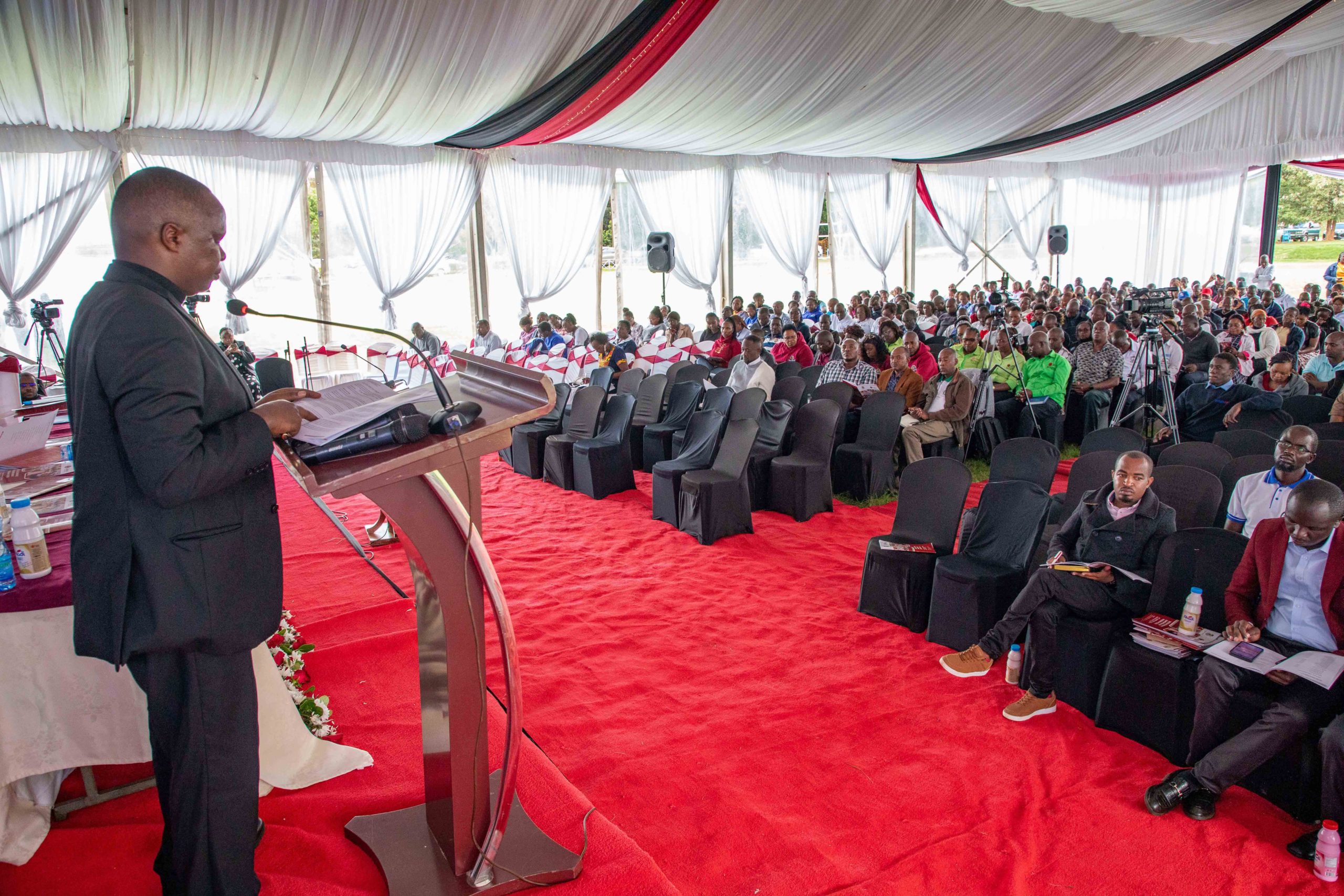
Leaders of self-help groups under the Socio-Economic Empowerment Programme (SEEP) have been urged to uphold strict accountability, strengthen governance, and remain grounded in their founding mission as the Archdiocese of Nairobi held its 34th Leaders Annual General Meeting (LAGM) at St. Mary’s School, Msongari.
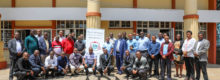
The meeting, which brought together hundreds of leaders and stakeholders from over 200 parish self-help groups, was guided by the theme, “Transforming Pilgrims of Hope into Dedicated Servants in the Care for Creation.” The gathering was attended by His Lordship, Rt. Rev. David Kamau, clergy, Caritas Nairobi leadership, stakeholders, and group representatives to reflect on progress and chart the course for 2026.
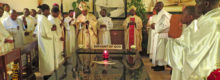
The day began with Holy Mass, during which His Lordship challenged leaders to translate faith into action, warning that institutions risk losing their purpose when they drift from their spiritual foundation. Drawing from the example of Saint Francis, he reminded participants that the call to “build the Church” goes beyond structures and includes restoring faith, values, and mission.
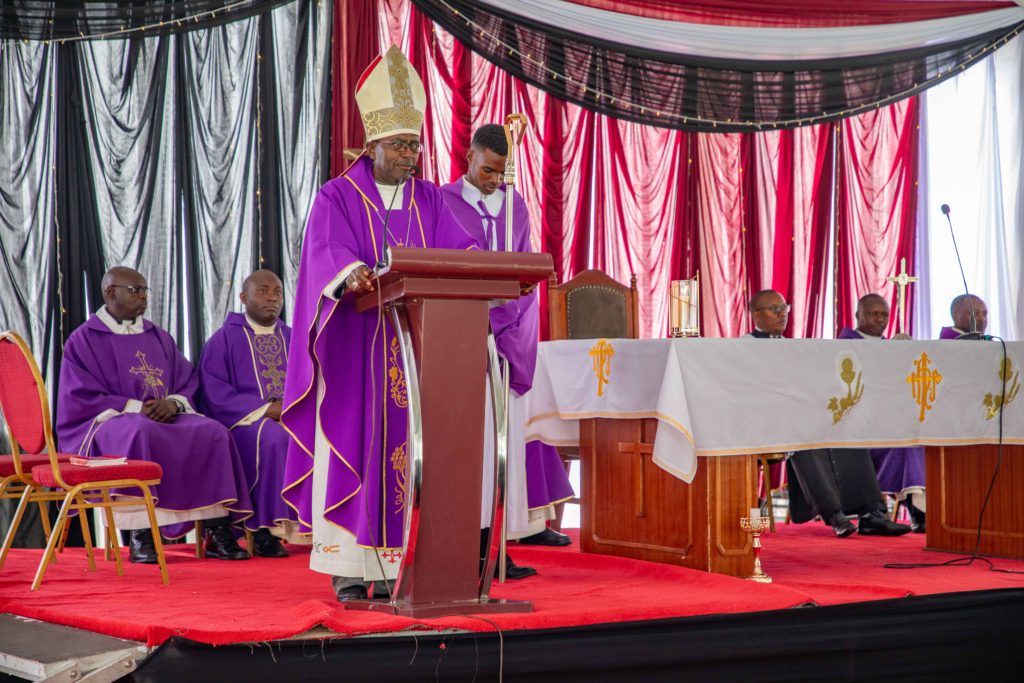
Bishop David Kamau giving the homily. 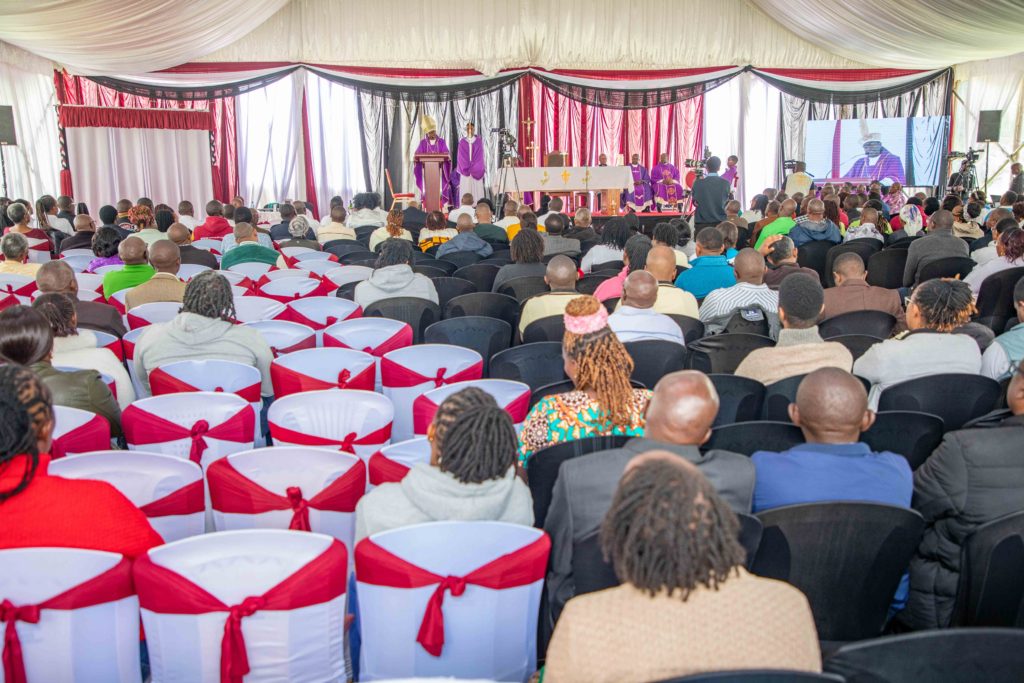
“Today, we need that same spirit,” Bishop Kamau said, cautioning that communities and even families can become “empty” when they lose their connection to God and their core purpose.
He further rooted his message in the legacy of the late Cardinal Otunga, founder of the self-help programme, noting that the movement was established on a clear vision of empowering communities through shared responsibility. He urged leaders to remain faithful not merely to systems and structures, but also to the spirit and intention behind them.
“If we lose that spirit, we risk losing the very identity of the self-help groups,” he said, emphasizing that success depends on preserving the original mission of service and solidarity.
Bishop Kamau also called for unity among members, likening it to people holding hands in the face of a flood.
“What you cannot achieve as an individual, you can achieve together,” he said, underscoring the importance of collective effort in overcoming economic and social challenges.
In his address, Caritas Nairobi Executive Director Rev. Fr. Peter Kiarie underscored that the annual meeting serves not only as a statutory requirement but also as a platform for accountability, renewal, and recommitment to service.
Fr. Kiarie highlighted notable institutional growth in 2025, including increased income, strengthened assets, improved liquidity, expanded audit coverage, enhanced staff capacity, and improved governance systems. However, he cautioned that economic pressures such as inflation and reduced household incomes continue to affect members’ ability to save and repay loans.
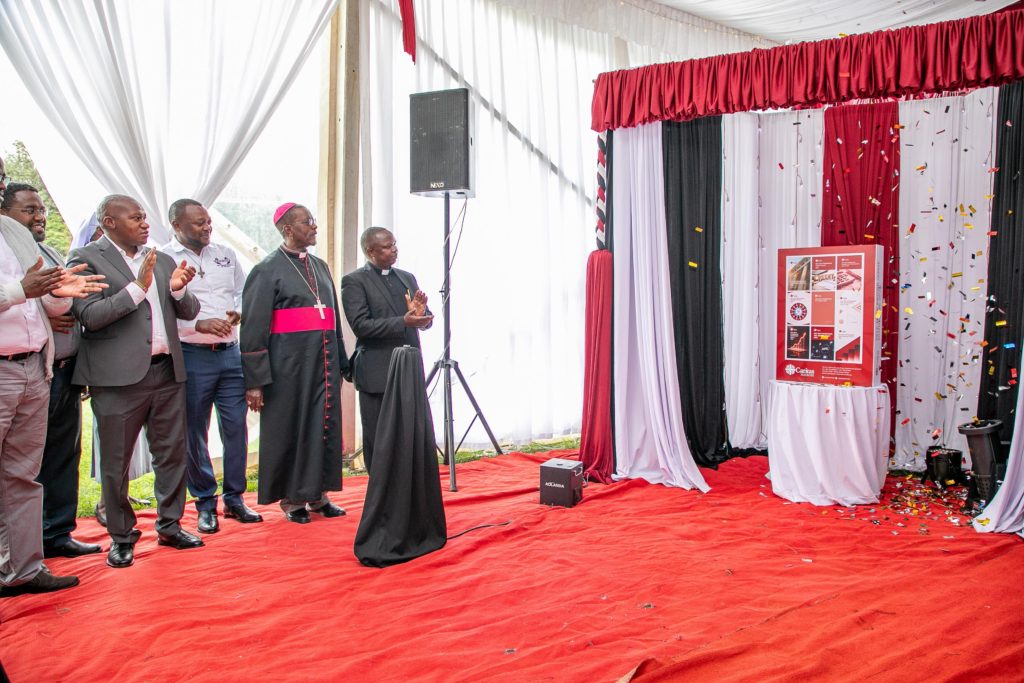
Bishop Kamau launching the Regulatory Frame work document. 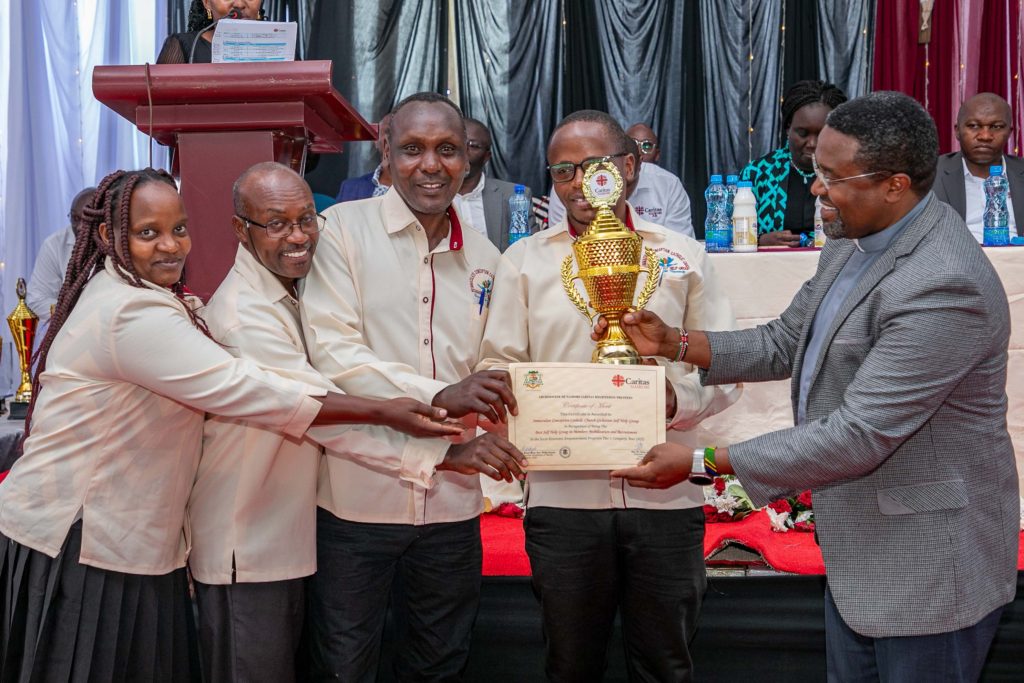
Members of the self help group receiving awards.
He issued a firm directive to group leaders to improve governance standards, warning that “good intentions alone are not enough.” Leaders were urged to ensure proper record-keeping, regular meetings, adherence to procedures, and transparent communication with members.
“Transparency and accountability are not optional; they are moral obligations and part of our Christian witness,” he said.
He also emphasized the need for continuous learning, noting that many governance challenges stem not from bad will, but from limited understanding or weak systems.
A call to action for 2026 urged leaders to strengthen institutional systems, safeguard members’ resources, and deepen their commitment to empowering communities through sustainable and value-based initiatives