CHURCH MUST INVEST MORE IN THE YOUNG PEOPLE AS AFRICA’S YOUTH POPULATION SURGES, AMECEA PLENARY TOLD

The Catholic Church in Eastern Africa must intensify its pastoral accompaniment of the young people by investing in their spiritual formation, leadership development and holistic well-being if it is to remain relevant in a rapidly changing world, Dr. Fr. Stephen Mbugua a lecturer at the Catholic University of Eastern Africa (CUEA) has said.
In his presentation delivered during the 21st Plenary Assembly of the Association of Member Episcopal Conferences in Eastern Africa (AMECEA) at the CUEA, Fr. Mbugua described young people as the Church’s greatest opportunity and urged bishops to recognize the growing number of forces competing for their attention.
“Young people are a vital part of the society and they contribute immensely through their energy, creativity, innovation and leadership,” he said, adding that their growing numbers demand greater attention from both the Church and society.
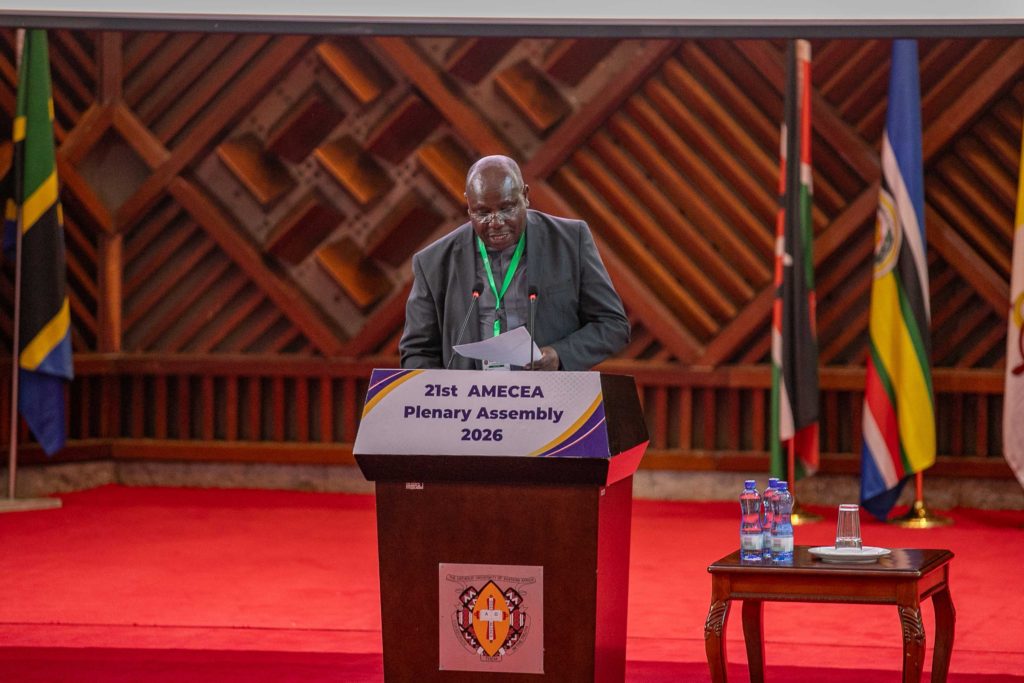
Rev. Fr. Dr. Stephen Mbugua giving his speech during the AMECEA Plenary.
In his research, Fr. Mbugua noted that there are approximately 1.2 billion young people aged between 15 and 24 globally, a representation of about 16 per cent of the world’s population, while Africa remains a home to the youngest population in the world. He observed that countries within the AMECEA region continue to record high percentages of young people, making youth ministry an urgent pastoral priority.
He further cautioned, that while governments, politicians, educational institutions, media, technology companies, fashion industries, sports organizations and other stakeholders are deliberately investing in young people, the Church must equally strengthen its engagement and accompaniment.
“It is important for the Church to recognize that she is not operating alone in this field,” he said, noting that many institutions seek to influence young people, each with different motivations and objectives.
Fr. Mbugua outlined some of the primary hurdles confronting the young people across the AMECEA region, including religious pluralism, radicalization, cultism, weak catechetical formation, political manipulation, unemployment, poverty, mental health challenges, substance abuse, early sexual exposure, identity crises, harmful cultural practices, digital addiction and the misuse of artificial intelligence among others.
To address these concerns, he called for renewed emphasis on the Catholic Social Teaching, holistic pastoral care, youth participation, leadership formation, professional counselling services, stronger collaboration between families, Church leaders and young people, as well as supportive public policies that safeguard the dignity and future of the youth.
Inspired by Pope Francis’ Apostolic Exhortation Christus Vivit, Fr. Mbugua reminded participants that being a youth is “more than simply a period of time; it is a state of mind,” emphasizing that it is the young people that keep the Church continually young and vibrant. He reiterated Pope Francis’ conviction that young people are “not merely the future of our world” but “its present,” already contributing to the life of the family, society and the Church.
He further concluded by challenging the Church to move beyond seeing young people as recipients of pastoral care and instead recognize them as partners in evangelization and development.
“The youth are not a problem to be solved. They have never been a problem. They will never be a problem,” he said. “They are the now and the future of the Church and of society.”
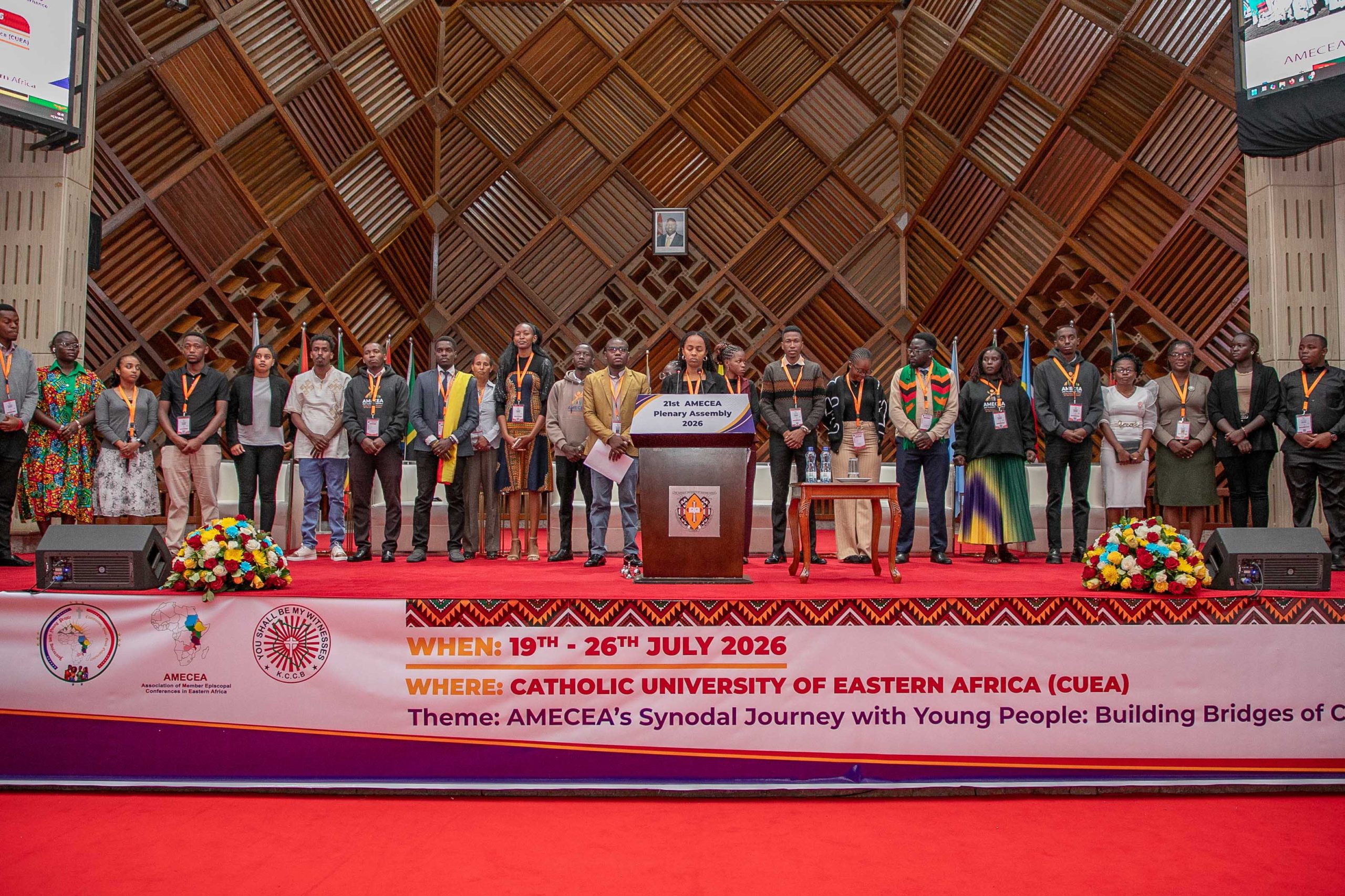
This presentation is among the many that set the tone for the ongoing discussions in the 21stAMECEA Plenary, whose central focus is strengthening the participation of young people in the life and mission of the Church across Eastern Africa.