
MEDIA IN KENYA CALLED TO TELL THE BIGGER STORY AHEAD OF THE 21ST AMECEA PLENARY

The Vice Chairman of the Association of Member Episcopal Conferences in Eastern Africa (AMECEA), His Grace Most Rev. Anthony Muheria who also is the Metropolitan Archbishop of the Catholic Archdiocese of Nyeri, Kenya and the bishop Vice Chair of the Kenya Conference of Catholic Bishops, has called on both Catholic and secular media in Kenya to provide thoughtful and impactful coverage of the 21st AMECEA Plenary, urging journalists to move beyond reporting events and instead help shape meaningful conversations around the Church’s mission and the realities facing young people in the region.
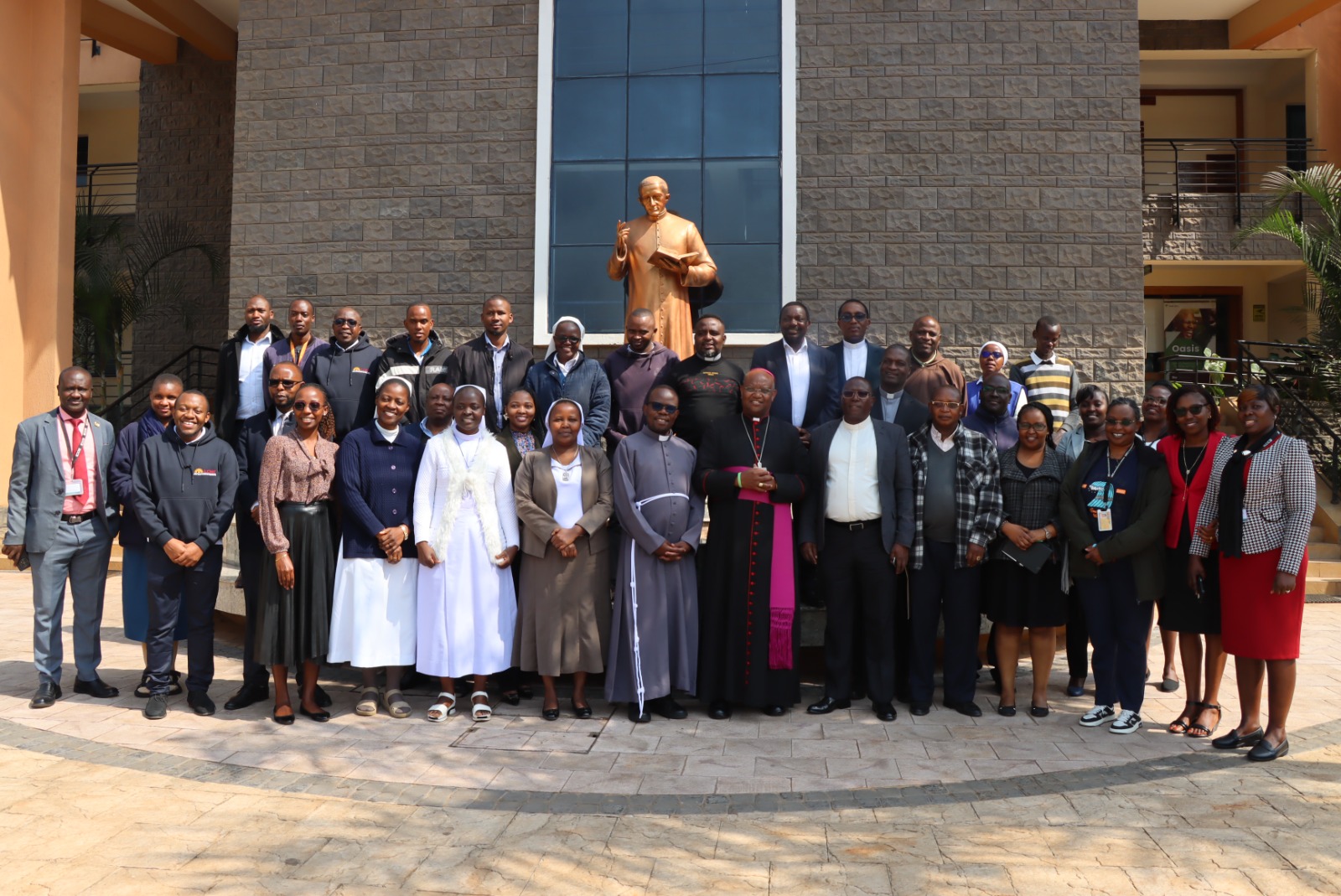
Archbishop Muheria was speaking during a media breakfast held at the Allamano center at Consolata Shrine, Westlands. This event was organized through a joint collaboration of the Kenya Conference of Catholic Bishops (KCCB), Commission for Social Communications and the Media Council of Kenya (MCK) ahead of the regional gathering, which will be held from 19th to 26th July 2026 at the Catholic University of Eastern Africa (CUEA) in Nairobi.
The meeting brought together the AMECEA Plenary Organizing Committee among them, KCCB Secretary General, Very Rev. Fr. Jude Waweru, AMECEA Communications Coordinator, Rev. Fr. Andrew Kaufa, the National Executive Secretary (NES)- KCCB Commission for Social Communications, Rev. Fr. Gerald Omunyin, priests communication directors of various dioceses, religious men and women, members of the Catholic media fraternity, and secular journalists to discuss preparations and expectations for the coverage of the plenary, whose theme is “AMECEA’s Synodal Journey with Young People: Building Bridges of Communion, Hope, Justice and Good Governance.”
Archbishop Muheria emphasized that effective reporting begins with adequate preparation and research.
“Without groundwork, there is no success,” he said, urging journalists to understand the objectives of the Plenary and the issues affecting young people before telling their stories.
He encouraged the media to engage bishops and delegates to help, create conversations that would help the world in general to better understand the Church’s pastoral response to contemporary challenges.
“The media must also create the conversation,” he noted.
His Grace also reminded journalists that the Plenary is a regional event bringing together delegates from the AMECEA member countries and affiliate jurisdictions. As such, he urged the media to broaden their perspective and avoid focusing only on Kenya.
“The story is nine countries,” he said, encouraging reporters to highlight the shared realities facing young people across Eastern Africa, including unemployment, migration, conflict, governance challenges and access to education.
Throughout his address, Archbishop Muheria stressed that the Assembly would focus on accompanying young people by listening to their experiences and responding to the issues that affect their lives.
He highlighted concerns such as unemployment, corruption, economic hardship, migration, family instability, digital opportunities, drug abuse and mental health, noting that these are conversations the Church cannot ignore.
The Archbishop also underscored the important role of families and mentors in nurturing young people, calling for stories that inspire hope and encourage responsible leadership.
The 21st AMECEA Plenary is expected to bring together Cardinals, bishops, priests, religious men and women, lay faithful, young people and experts from across Eastern Africa to reflect on the Church’s mission in today’s rapidly changing world.
Throughout the plenary, delegates will participate in Eucharistic celebrations, keynote presentations, panel discussions and working sessions focusing on youth, evangelization, peacebuilding, safeguarding, digital evangelization and integral human development.
The Plenary is expected to conclude with pastoral recommendations that will guide the Church’s mission across the AMECEA region in the coming years.
As preparations continue, Archbishop Muheria reminded media practitioners that they are not merely observers but partners in communicating the Church’s message of hope, communion and justice, ensuring that the conversations held during the Plenary Assembly reach families, communities and society at large.